You are here: Solutions > What is a Bayesian Filter?
What is a Bayesian Filter?
Bayesian spam filters are content-based filters specifically trained to recognize the individual email user's spam and good mail, making them highly effective and difficult for spammers to adapt to.
These innovative filters calculate the probability of a message being spam based on its contents. Unlike simple content-based filters, Bayesian spam filtering learns from spam and from good mail, resulting in a very robust, versatile, and efficient anti-spam approach that, best of all, hardly returns any false positives.
Those of us plagued by the onslaught of tens—if not hundreds—of unwanted emails greeting us as we open up our email accounts have some hope for respite in the form of Bayesian spam filters. For years, spammers have been able to remain one step ahead of spam blockers simply because of their creativity and ability to adjust and evade blocking each time a new spam filter was developed.
As a result, anti-spam software developers were certain of the task before them: to develop software that could continually learn from the new and creative techniques of spammers, and as a result never fall behind in the spam blocking game. Think about how you detect spam. A quick glance is often enough. You know what spam looks like, and you know what good mail looks like. The probability of spam looking like good mail is around... zero.
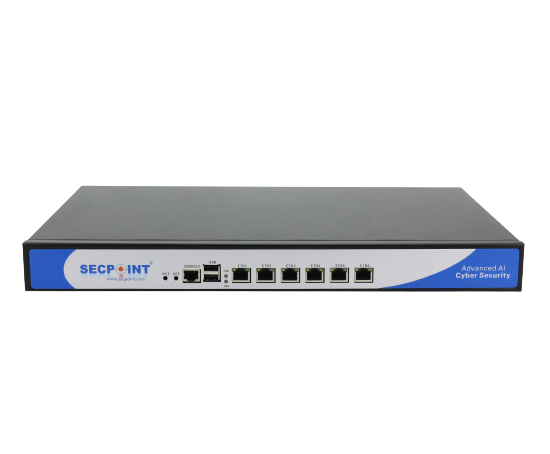
The SecPoint® Protector (http://www.secpoint.com/secpoint-protector.html) comes fully loaded with this feature to give the customers the best anti-spam solution.
Scoring Content-Based Filters Do Not Adapt
Wouldn't it be great if automatic spam filters worked like that too? Scoring content-based spam filters try it. They look for words and other characteristics typical of spam. Every characteristic element is assigned a score, and a spam score for the whole message is computed from the individual scores. Some scoring filters also look for characteristics of legitimate mail, lowering the complete score.
The scoring filters approach works, but it also has several problems. The list of characteristics is built from the spam (and the good mail) the filter maker gets. To get a good grasp of the typical spam anybody might get, mail must be collected at hundreds of email addresses. This weakens the efficiency of the filters, especially because the characteristics of good mail will be different for each person, but this is not taken into account.
The characteristics to look for are more or less set in stone. If the spammers make the effort to adapt (and make their spam look like good mail to the filters), the filtering characteristics have to be tweaked manually, which is an even bigger effort.
The score assigned to each word is probably based on a good estimate, but it is still arbitrary. And like the list of characteristics, it neither adapts to the changing world of spam in general nor to an individual user's needs.
Bayesian Spam Filters Tweak Themselves, Getting Better and Better
Bayesian spam filters are a kind of scoring content-based filters as well. However, this approach does away with the problems of simple scoring spam filters, and it does so radically. Since the weakness of scoring filters is in the manually built list of characteristics and their scores, this list is eliminated.
Instead, Bayesian spam filters build the list themselves. Ideally, you start with a (big) bunch of emails that you have classified as spam, and another bunch of good mail. The filters look at both, and analyze the legitimate mail as well as the spam to calculate the probability of various characteristics appearing in spam and in good mail.
The characteristics of a Bayesian spam filter can be the words in the body of the message and its headers (senders and message paths). It can also be other aspects such as HTML code (like colors) or even word pairs, phrases, and meta information (where a particular phrase appears).
If a word—"Cartesian", for example—never appears in spam but often in your legitimate mail, the probability of "Cartesian" indicating spam is near zero. "Toner", on the other hand, appears exclusively, and often, in spam. "Toner" has a very high probability of being found in spam, not much below 1 (100%).
When a new message arrives, it is analyzed by the Bayesian spam filter, and the probability of the complete message being spam is calculated using the individual characteristics. Let's say a message contains both "Cartesian" and "toner". From these words alone, it's not yet clear whether we have spam or legit mail. But other characteristics will (most probably) indicate a probability that allows the filter to classify the message as either spam or good mail.
Bayesian Spam Filters Can Adapt Automatically
Now that we have a classification, the message can be used to train the filter further. In this case, either the probability of "Cartesian" indicating good mail is lowered (if the message containing both "Cartesian" and "toner" is found to be spam), or the probability of "toner" indicating spam must be reconsidered.
Using this auto-adaptive technique, Bayesian filters can learn from both their own and the user's decisions (if he manually corrects a misjudgment by the filters). The adaptability of Bayesian filtering also makes sure they are most effective for the individual email user. While most people's spam may have similar characteristics, the legitimate mail is characteristically different for everybody.
How Can Spammers Get Past Bayesian Filters?
The characteristics of legitimate mail are just as important for the Bayesian spam filtering process as the spam is. If the filters are trained specifically for every user, spammers will have an even harder time working around everybody's or even most people's spam filters, and the filters can adapt to almost everything spammers try.
Spammers will only make it past well-trained Bayesian filters if they make their spam messages look perfectly like the ordinary email everybody may get. They could do that today too. Spammers do not usually send such ordinary emails, I presume, because they don't work. So chances are they won't be doing it when ordinary, boring emails are the only way to make it past the anti-spam filters.
However, if spammers do switch to mostly normal-looking emails, we will then see a lot of spam in our inboxes again, and email may become as frustrating as it was in pre-Bayesian days (or even worse). It will also ruin the market for most kinds of spam, though, and thus won't last for long.
One exception can be formulated by spammers in order to work their way through Bayesian filters even with their usual content. It's in the nature of Bayesian statistics that one word that very frequently appears in good mail can be so significant as to turn any message from looking like spam to being rated as good mail by the filter.
If spammers find a way to determine your surefire good-mail words—by using HTML return receipts to see which messages you opened, for example—they can include one of them in a junk mail and reach you even through a well-trained Bayesian filter.