
Professional WiFi penetration testing and wireless security assessment for authorized audits of business wireless networks and connected devices.
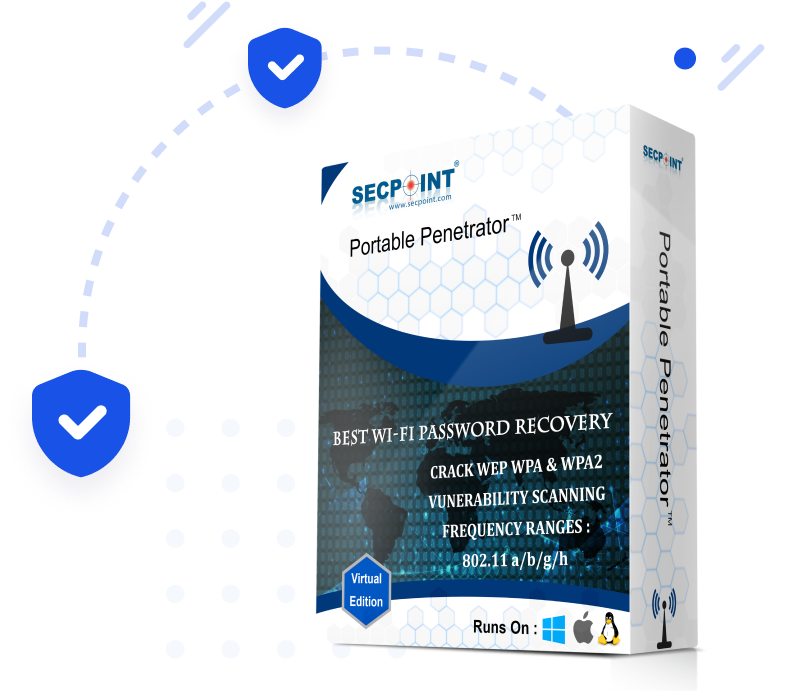

No Data Collection and Full Privacy

WEP, WPA, WPA2 and WPS Key Recovery

Professional PDF, HTML, XML and XLS Reporting

Report Branding with Logo and Watermark

34 Vulnerability Scanning Profiles
Similar to the standard SecPoint® Penetrator™, the Portable Penetrator™ combines vulnerability management with professional WiFi security assessment. It is designed for authorized testing of WiFi networks and provides a user-friendly interface, professional reporting, privacy controls, and practical guidance for securing wireless environments.


The Portable Penetrator™ supports professional WiFi security auditing with compatible WiFi adapters, packet injection, monitor mode and optional external antennas for improved range during authorized testing.
The package provides clear instructions on how to secure your own WiFi network. Reports can be branded with your own logo, company name and watermark. The software contains no backdoors, does not gather customer data and keeps all audit data under the customer's control.

Portable Penetrator™ helps authorized teams test whether their own WiFi security can resist password recovery, weak WPS configuration, poor encryption choices and unsafe wireless access point settings.

The software produces professional reports with executive summaries for management and detailed technical findings for IT teams. Reports can be branded with your logo, company name and watermark to support customer-facing or internal security work.

Portable Penetrator™ combines WiFi testing with vulnerability assessment, helping administrators detect weak wireless security, exposed systems, web vulnerabilities, data leaks and other risks. The report provides guidance on how to mitigate identified vulnerabilities.