
Does the cloud Penetrator Find SQL Injection?
Yes it does find SQL Injection and tell you how to fix it.
It crawls your entire site like a search engine such as Google would do it.
Then it can detect SQL Injection on custom made scripts as well.
Typically it is home written scripts that are vulnerable to SQL Injection.
This can be scripts made by non security personnel at the web agency or local staff.
When the site is vulnerable to SQL Injection it can allow an attacker to inject code in to the target Database and retrieve sensitive information.
The primary purpose of a SQL injection is to steal data from organizations, companies or wherever it is targeted.
The SQL injection is by far one of the most popular kinds of application layer techniques that is in use today.
Primarily, the SQL injection tries to capitalize upon the improper coding of you web page.
If the coding of your web page is not done in the right manner, a person with knowledge of hacking will be able to inject SQL commands in to a page, such as a login form, which ultimately allows them to gain access to the database of your website.
The main purpose because of which the SQL injection arises is because the empty fields which are present for user input are able to allow SQL statements to pass through, hence allowing them to send queries to the database without making use of the login form/ authorization process at all.
Web applications primarily allow users to gain access to data, submit and receive it by making use of a very simplistic login system to and from the database.
You can access any website by fulfilling the login form in your web browser of choice and then proceed.
Databases are used for the storage of data that is useful for the suppliers, website users, etc.
Information such as user credentials, financial information, etc. are all easily stored on databases, and can be accessed by those who have proper login verification.
By making use of the SQL injection hacking technique, a person is able to send out SQL commands or statements by using a web application.
These commands are then executed by the backend database. Because of the improper coding that might exist.
Web applications are likely to result in SQL injections which will provide access to hackers who are looking to view the information on a database, or even worse, to wipe it all out.
Common features such as feedback forms, login pages, etc. are all susceptible to SQL injections, provided that they have not been coded properly.
Support pages and product request forms are also susceptible.
A person with sophisticated knowledge of SQL injections is also able to bypass shopping carts and internet based delivery of dynamic content in order to gain access to the back end database and make alterations.
SQL injections have been frequently used in the past by hackers in order to gain access to lower level databases, and as the knowledge of the people have increased, proper security measures are now taken.
Structured Query Language/SQL is a programming language.
It is used for managing and organizing data present in a databank/database.
A database is an organized collection of data structures and information and includes critical user details such as login id, password and names, etc.
It can be stated that SQL is a relational database management system.
There are various kinds of management systems that utilize Structured Query Language for instance, Oracle, Microsoft SQL Database, MySQL and PostgreSQL, etc.
SQL Injection is a type of cyber-attack which hackers employ conveniently for invading a database.
The core idea is to compromise the privacy and security of a database and control the application.
It is a system based upon code injection technique.
Hackers rely upon SQL injection for benefiting from the non-validated input weaknesses for passing SQL commands via a Web application for implementation through a backend databank.
Basically, this system is used for attacking data-driven applications and exploiting security vulnerability or weakness in the application’s software is mandatory.
The reasons for attacking can be various and wide-ranged, depending upon the extent of malicious intentions of the hacker.
A database can be hacked for retrieving valuable information from the targeted site and it may involve bypassing the logins and accessing the data.
An example of this sort of attack is the year 2012 Yahoo hack.
Through this kind of attack, hackers can make alterations to the application such as changing or modifying the front page or even the website content.
The highest level of SQL injection attack is shutting down the server of a website.
Programmers usually chain SQL commands together with parameters provided by users.
This mechanism embeds SQL commands within the parameters, which gives the attackers and edge.
Resultantly, the attackers are able to execute random SQL queries/commands on the backend database server with help of the web application.
SQL injection is a simple procedure:
Scan websites for evaluating if vulnerability exists in a database.
In this regard, Google serves as the perfect tool because by simply employing Google Dork, an attacker can search for weaknesses via Google tricks.
Once the target website is detected and identified, the hacker needs to search for the database containing usernames and directories.
Hacker will search for any structure which contains sensitive data.
According to the SQL Injection Prevention Cheat Sheet provided by the Open Web Application Security Project, there are two types of defense mechanisms: Primary and Additional.
Primary Defenses:
• Using parameter queries is important so that developers define the SQL codes and pass them in each parameter to the query.
This allows databases to differentiate between code and data, irrespective of the input.
• Stored procedure also helps.
It defines and stores itself in the database and is then accessed from the application instead of allowing users to enter.
• Each DBMS backs some sort of character escaping schemes particular to different queries.
If all user input is supplied through proper escaping scheme then the DBMS will not mix-up input with SQL code.
• By reducing the privileges allotted to a database account.
This will ensure that users enjoy adequate instead of unbounded access.
• Input validation can help in detecting illegal input before the application processes it.
Does your website have a web form – someplace where you ask your visitors to sign in with their name and password?
Do you know this probably makes your site susceptible to a SQL injection?
Have you heard of a SQL injection?
Are you aware of what a SQL injection can do to your site?
If you’re answering ‘no’ to those questions, you’ll want to read on.
We're sharing here what a SQL injection is, how you can protect your site from one, and how you can fix your site when a SQL injection happens to you.
If you’ve heard of a SQL injection and think they’re a thing of the past, keep dreaming.
They should be a thing of the past because we know about how to prevent them.
Any yet, big companies still face SQL injection threats all the time, because proper safeguards are usually not in place. So, even you doubters, read on.
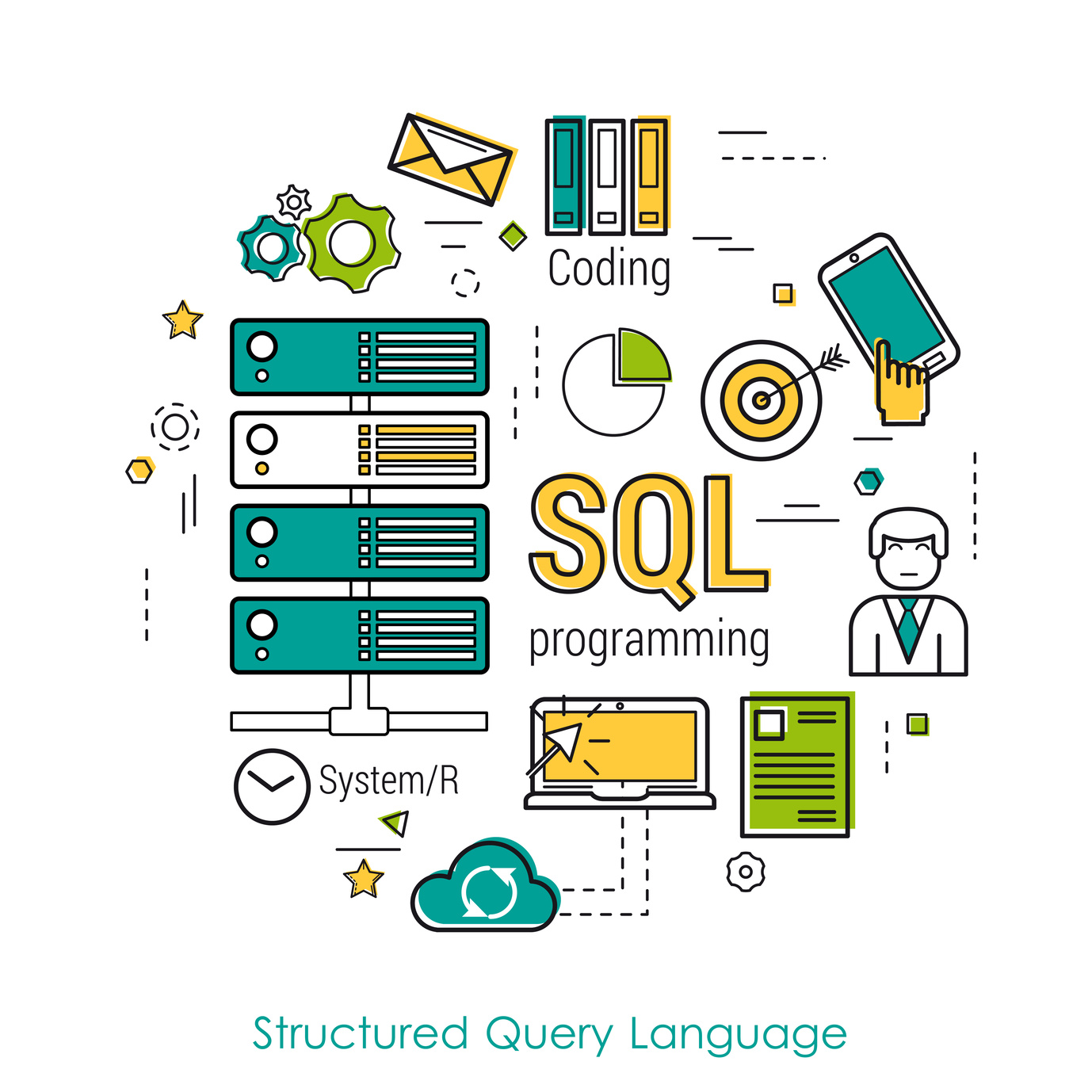
First off, SQL stands for Structured Query Language.
A (SQL) injection is a code injection technique used to attack data-driven applications.
It’s the most common kind of attack on internet-facing SQL server databases, as any web application using dynamic SQL is at risk of a SQL injection.
A remote blackhat attacker can inject SQL Structured Query Language technical programming code that can be used from a web form to take input in order to access the backend SQL and force changes to the data stored in the database they’re attacking.
When they access the database via an over-privileged account, they can read, write, and delete content stored in the database.
In the worst cases, the remote attacker finds a way to execute commands on the operating system – and that can lead to an escalation of damaging attacks.
Popular SQL injections include stealing passwords, leaking credit card information, and making changes to website content.
Retailers are a common target.
(1) Weak input validation, (2) dynamic SQL without proper type-safe parameters, and (3) the use of over-privileged database logins – that’s what.
Most web forms do not have security in place to block inputs that are not names and passwords.
So, typically, a web form is built to recognize and authenticate expected names and passwords, and it’s built to deny incorrect names and passwords.
But it’s not built securely enough to block coders who know how to inject code in place of the expected name and password input to override the system.
Absent proper security mechanisms, a remote attacker can use the input boxes on the web form to make their own request by code.
And that request can be: download the whole database.
Just some commands in code to bypass authentication, and now that remote attacker has full charge over what you thought was secure – sensitive, and certainly private – information. Yikes! Yeah, we know…
What’s worse?
There are now automated SQL programs available.
So, where a remote attacker used to have to enter a SQL injection input manually, an automated approach is now possible.
With this automation, the likelihood of an attack and the damage wrought by an attack both increase.
Even the newest to coding can quickly and swiftly become SQL injection pros with programs to help them automate the function.
The good news is that a SQL injection is a fairly simple type of attack.
More good news: SQL injection attacks can be prevented (almost completely) by strict adherence to some basic coding best practices.
But, we do mean strict.
There’s really no room for error.
So, emphasize security in the development of your website and web forms, and make sure your developers are up to code – pun intended.
Control the input values that the input boxes on your web forms will accept.
Put another way, prevent user-supplied input that contains malicious SQL from breaking the logic of the query.
By sanitizing your web forms in this way, you’ll make sure that user input can’t ever (or almost ever) break the query form.
– Dynamic SQL.
Because using the parameters means that inputs to the form will be taken as literal values and not via executable vulnerable code.
Also, a parameter collection will allow you to enforce checks on input type & the length.
An input that is an exception to the type and length of the good data in the database will be flagged as the exception it is – and this trigger warning will help you recognize the attacks your parameters collection are catching.
When dynamic SQL is the only option and parameterized SQL can’t be used, put escape routines in place to protect characters with special input meanings to a SQL server – like the single quotation mark, for example.
Without escape routines, a special character can be used by a remote attacker to hack a SQL injection.
Access your database through an account that has access to the DB.
This way you’ll minimize the chances of a remote attacker getting a hold of an over-privileged account and executing devastating (or, at best, crippling) commands in your operating system.
Don’t give detailed information to the end user, in moments when your database does err.
With this as the default, you’re sharing information with users who might be erring on their way to breaking into your system.
Keep your information to yourself, or you’ll be aiding remote attackers in their trial and error efforts to infiltrate your server.
SecPoint to the rescue.
Need guidance putting these safeguards in place? Or, did you already put all those protections in place and you still had bad luck?
We’re IT security solutions experts, and we want to make sure your website is secure.
Our cloud penetration scans for SQL injection will help identify vulnerabilities in your system.
Then we’ll work together to strengthen them.
We’re global, so no matter where you are (or when you are) we’re ready to help.
Get in touch, and sign up for your free vulnerability scan today.