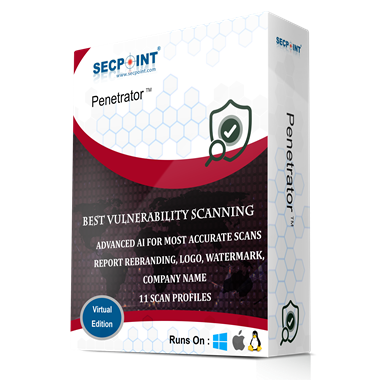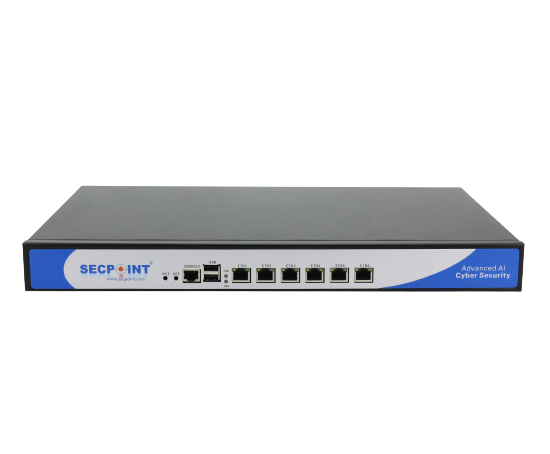
Attackers only need one forgotten vulnerability, one exposed service or one leaked credential to break in. SecPoint® Penetrator™ helps you find the weak points first with scheduled vulnerability scanning, Dark Web Search, authenticated scanning, on premises deployment, local data control and technical scan profiles for NIS2, CRA, DORA, CMMC, OWASP and more. It helps support compliance work with technical checks and reports, but it does not replace legal, organizational or consultant-led compliance work.
What is exposed?
Unknown vulnerabilities, open services and weak configurations can give attackers the first foothold.
Can you document security checks?
NIS2, CRA, DORA, CMMC, OWASP and other technical scan profiles help turn vulnerability checks into clear evidence and reports.
Is your data already leaked?
Dark Web Search helps reveal exposed domains, credentials and leaked data before they become an incident.
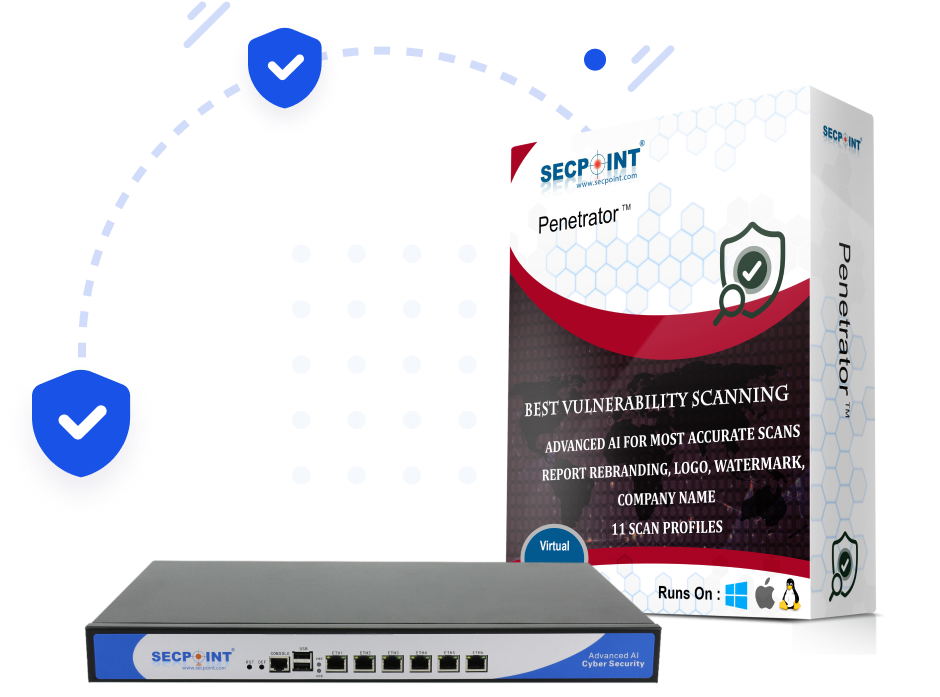

146,000+ Vulnerability Signatures

User-Based MFA with QR Code Setup

MSP Functionality with Multi-User Support

Local Data Control and Transparent Privacy Menu

SecPoint® RBL and Toxic IP Blocking
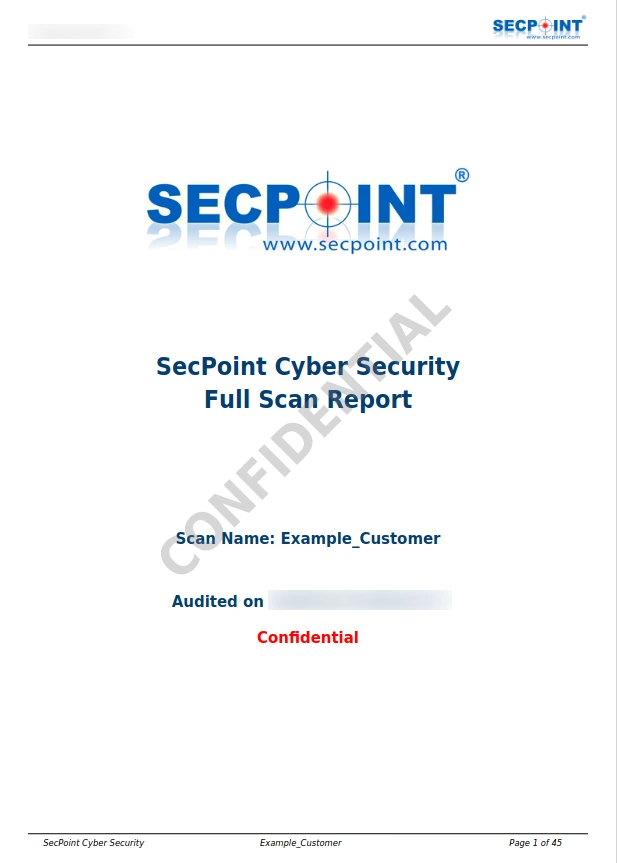
SecPoint® Penetrator™ can generate professional reports with your logo, company name, watermark and language selection. This helps MSPs, resellers, consultants and internal security teams deliver clear vulnerability findings under their own brand.
Brand the report
Add logo, company name and watermark to make reports look professional and customer-ready.
Choose language and format
Create reports in multiple languages and export results as PDF, HTML, XLS or XML.
Support compliance work
Use scan profiles to document technical findings for security and compliance projects without claiming to replace full legal or consultant-led compliance work.

Scan local and public IPs, web applications, servers and network devices using 146,000+ vulnerability signatures, 34 scan profiles and advanced AI-assisted accuracy.
Reports are available in PDF, HTML, XLS and XML, with CVSS v3 support, scan profile descriptions, white-label branding, language selection and clear remediation guidance.

Deploy as a virtual appliance, 1U appliance, SFF appliance or cloud model, with support for VMware ESXi, Microsoft Hyper-V, Microsoft Azure and Linux G4L.

The reporting engine supports 28 languages, including English, Danish, Swedish, German, French, Spanish, Ukrainian, Indonesian, Macedonian, Serbian, Slovak and many more.

Manage vulnerabilities with scheduled scans, ticketing, comparison with previous results, scan notifications, syslog export, and detailed reports for both technical teams and management.

Identify exposed domains, credentials and leaked customer data, and combine dark web exposure checks with vulnerability scanning and data leak detection.

Scan websites and services for SSL and TLS weaknesses, including Heartbleed, POODLE SSL and other known weaknesses.

The SecPoint® Penetrator™ helps organizations identify and manage vulnerabilities across local networks, public IPs, web applications, servers and network devices.
It combines scheduled scanning, 34 scan profiles, AI-assisted accuracy, CVSS v3 support, ticketing, reporting and dark web exposure checks.
The Penetrator can scan servers, websites, firewalls, routers, VPN devices, VoIP systems, IoT devices, databases and other reachable systems with an IP address.
It reports vulnerabilities in PDF, HTML, XLS and XML formats, helping both technical staff and management understand risk and remediation priorities.
The Penetrator scans both public-facing infrastructure and internal local IPs.
Scan target locations can be shown with integrated geo mapping, including a world map view for the last 20 scanned locations.
The Penetrator supports vulnerability identifiers such as CVE, NIST/NVD, Microsoft, Ubuntu and other references.
CVSS v3 support helps provide modern severity scoring and clearer prioritization in vulnerability reports.
SecPoint® maintains regular database and firmware updates to keep the Penetrator aligned with new vulnerabilities and improved checks.
With 146,000+ vulnerability signatures and 1,400 web shell detections, the Penetrator is designed for continuous security assessment.
The Penetrator uses concurrent IP scan licensing, making it flexible for organizations that need to scan changing IP ranges and different environments.
Full-port TCP scanning has been improved for faster audits across all 65,535 ports.
Dark Web Search helps identify exposed credentials, leaked domains and other data that may already be circulating outside the organization.
When combined with vulnerability scanning and data leak detection, it gives a stronger view of both technical weaknesses and real-world exposure.

Stay ahead with scheduled vulnerability scanning, authenticated assessments, Dark Web Search, 34 technical scan profiles, AI-assisted accuracy and detailed reports for technical teams and management.